

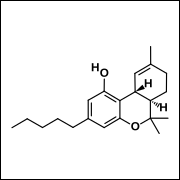
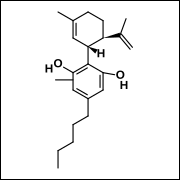
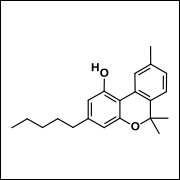
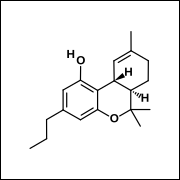
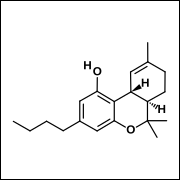
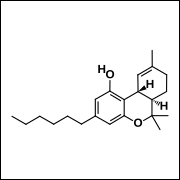
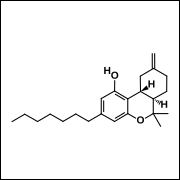
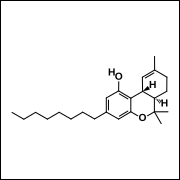
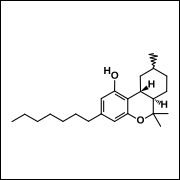
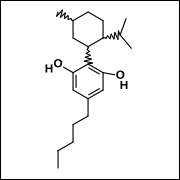
THCB, or tetrahydrocannabutol, is a cannabinoid that is structurally related to Δ9 THC and belongs to the same family of psychoactive compounds. At a molecular level, THCB differs from Δ9 THC by the length of its alkyl side chain. While Δ9 THC contains a 5-carbon side chain, THCB features a 4-carbon side chain. This seemingly small variation influences how the molecule interacts with CB1 receptors in the endocannabinoid system, resulting in a psychoactive profile that is broadly comparable to, and in some cases slightly stronger than, traditional THC.
With a molecular formula of C₂₀H₂₈O₂, THCB maintains the same core structure as Δ9 THC, but its altered side chain contributes to differences in receptor binding affinity and overall potency. Based on current research and receptor interaction studies, THCB is often estimated to deliver effects in the range of one to one and a half times the potency of Δ9 THC, although individual response and formulation context remain important factors.
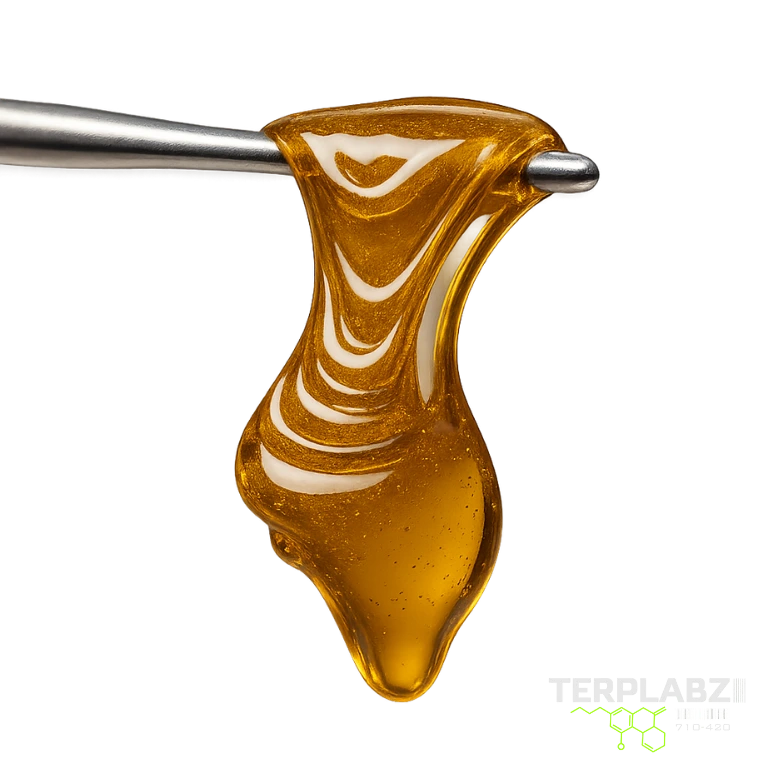
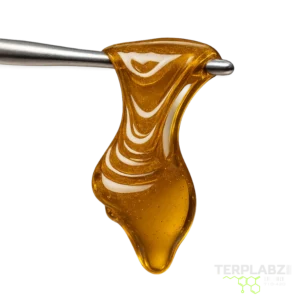
In its physical form, this material presents as a rich golden distillate with an exceptionally high viscosity. Unlike crystallized cannabinoids, THCB in this state remains fully amorphous, with no visible crystal formation. The consistency is notably thick and dense, requiring controlled handling, especially at lower temperatures where the flow becomes significantly restricted. When gently heated, the distillate becomes more fluid and easier to process, while maintaining a smooth, uniform texture that reflects a high level of refinement.
The deep golden coloration is characteristic of well-processed cannabinoid distillates and can vary slightly depending on minor compounds and processing conditions. The material exhibits a clean, glossy appearance with consistent density throughout, indicating a stable and homogeneous composition without visible impurities or separation.
THCB is commonly associated with a classic THC-like experience, often described as a combination of euphoria, relaxation and altered sensory perception. Due to its receptor interaction, the effects are generally perceived as familiar but slightly more pronounced, making it a compound of interest for advanced formulations that aim to replicate or enhance traditional THC profiles.
| THCB | 96,9% |
|---|
Reviews
There are no reviews yet.