Marquee Test 2
LIFE'S GOOD WITH THE RIGHT TERPS LIFE'S GOOD WITH THE RIGHT TERPS LIFE'S GOOD WITH THE RIGHT TERPS
Marquee Test
LIFE'S GOOD WITH THE RIGHT TERPS LIFE'S GOOD WITH THE RIGHT TERPS LIFE'S GOOD WITH THE RIGHT TERPS

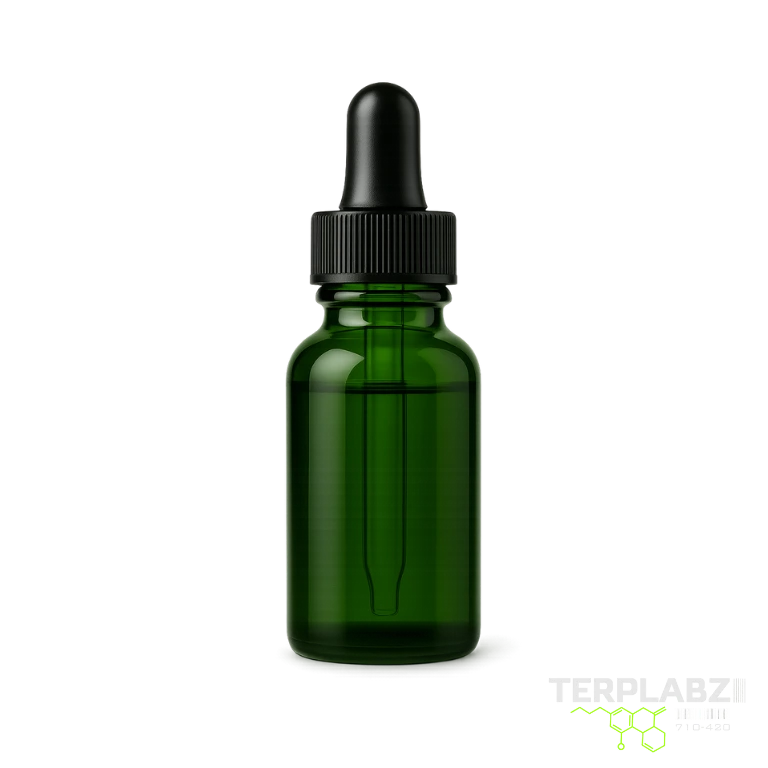
Δ9 tincture | TERPLABZ

(11 customer reviews)

Price range: 49,95 € through 199,95 €

This product is currently sold out!

No worries! Please enter your e-mail address and we will promptly notify you as soon as the item is back in stock.

Great! You have been added to the waitlist for this product. You will receive an email as soon as the item is back in stock.

For users who want a precise, long-lasting THC effect without vaping or smoking. Ideal for stacking, discreet daytime use, or deeper evening resets. Also great for edible lovers who want an easy option.

-Team TERPLABZ

Δ9 tincture | TERPLABZ

(11 customer reviews)

Price range: 49,95 € through 199,95 €

Δ9

20%

C8 MCT oil

80%

Δ9 per 1ml

200mg

Δ9 per 1 drop

10mg

This section provides a general overview of the cannabinoids and terpene types in our library, including their effects, structure and origin.
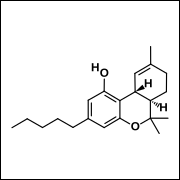
Δ9 THC

Δ9 THC is the primary naturally occurring psychoactive cannabinoid found in cannabis and is responsible for the characteristic “high” associated with the plant. Users commonly report feelings of euphoria, enhanced sensory perception, relaxation and changes in mood or appetite. Because it occurs naturally in cannabis and interacts strongly with cannabinoid receptors, Δ9 THC is generally considered the most effective naturally occurring psychoactive cannabinoid in the plant. In both recreational and medical contexts Δ9 THC is frequently used for pain relief, appetite stimulation, nausea reduction and muscle relaxation.

Δ9 THC has the molecular formula C₂₁H₃₀O₂ and occurs naturally in cannabis plants as THCA, which converts into active Δ9 THC through decarboxylation when heated. Within the endocannabinoid system Δ9 THC acts primarily as a partial agonist of CB1 receptors in the brain and nervous system, with weaker activity at CB2 receptors in the immune system. This interaction with CB1 receptors is largely responsible for its psychoactive and therapeutic effects.

Delta 9 THC molecular structure
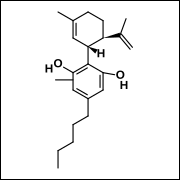
CBD

CBD is a non-intoxicating natural cannabinoid commonly associated with calming and balancing effects. Unlike Δ9 THC it does not produce a “high”. Many people use CBD for relaxation, pain relief and to reduce inflammation or anxiety. It is widely used in wellness products and medical cannabis formulations because it can support the body without causing intoxication.

CBD has the molecular formula C₂₁H₃₀O₂ and occurs naturally in cannabis plants. Within the endocannabinoid system CBD shows low binding affinity for CB1 receptors and instead influences several signaling pathways that can modify how cannabinoids interact with CB1 and CB2 receptors.

CBD molecular structure
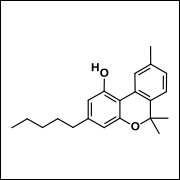
CBN

CBN is a mildly psychoactive natural cannabinoid commonly associated with relaxing and sedating effects. It is often linked to physical calmness and is frequently used in formulations aimed at promoting rest and sleep support. Compared to Δ9 THC its psychoactive effect is much weaker, but many users report that CBN contributes to a heavier body relaxation and a more calming overall experience.

CBN has the molecular formula C₂₁H₂₆O₂ and is formed naturally through the oxidation and degradation of Δ9 THC over time. As cannabis ages or is exposed to heat and oxygen, a portion of THC gradually converts into CBN. Within the endocannabinoid system CBN shows moderate affinity for CB2 receptors and weaker activity at CB1 receptors, which contributes to its mild psychoactive properties and its commonly reported relaxing effects.

CBN molecular structure
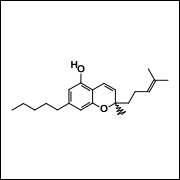
CBC

CBC is a non-intoxicating natural cannabinoid commonly associated with mood support and subtle physical relaxation. Although it does not produce a psychoactive “high”, it is believed to contribute to the overall entourage effect of cannabis by working together with other cannabinoids. Users often describe CBC as adding smoothness to a formulation while supporting a balanced and uplifting effect profile.

CBC has the molecular formula C₂₁H₃₀O₂ and occurs naturally in cannabis plants alongside cannabinoids such as THC and CBD. Within the endocannabinoid system CBC shows very low affinity for CB1 receptors but acts more strongly at CB2 receptors. It also activates TRP channels, particularly TRPA1 and TRPV1, which are involved in pain signaling and inflammatory responses. Through these natural mechanisms CBC is commonly associated with anti-inflammatory effects and contributes to the broader entourage effect of cannabinoid formulations.

CBC molecular structure
CBG

CBG is a non-intoxicating natural cannabinoid often associated with mental clarity, focus and mild physical relaxation. Unlike Δ9 THC it does not produce a psychoactive “high”. Many users describe CBG as having a more stimulating and clear-headed effect compared to other cannabinoids, which is why it is sometimes used in formulations intended to support daytime use, focus or cognitive balance.

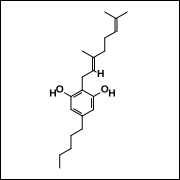
CBG has the molecular formula C₂₁H₃₂O₂ and occurs naturally in cannabis plants in smaller amounts compared to cannabinoids such as THC and CBD. Within the endocannabinoid system CBG interacts with both CB1 and CB2 receptors, acting as a partial agonist with relatively moderate affinity. In addition to cannabinoid receptors, CBG also interacts with several TRP channels involved in pain and sensory signaling, which contributes to its commonly reported effects on inflammation and physical discomfort.

CBG molecular structure
THCV

THCV is a natural cannabinoid structurally related to Δ9 THC but with a noticeably different effect profile. At lower doses THCV is generally described as non-intoxicating and associated with increased mental clarity and focus. At higher doses it can produce mild psychoactive effects, often described as shorter in duration and more stimulating than the effects of Δ9 THC. Because of this profile, THCV is sometimes associated with energetic or daytime oriented cannabis experiences.

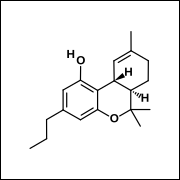
THCV has the molecular formula C₁₉H₂₆O₂ and occurs naturally in certain cannabis varieties, particularly African landrace strains. Its molecular structure is very similar to Δ9 THC, but it contains a 3-carbon side chain rather than the 5-carbon side chain found in Δ9 THC. This shorter side chain reduces its ability to activate CB1 receptors, which helps explain its milder and often more stimulating effect profile.

THCV molecular structure
THCB

THCB is a cannabinoid structurally related to Δ9 THC and produces psychoactive effects similar to traditional THC. Users often describe its effects as comparable to Δ9 THC, including euphoria, relaxation and changes in sensory perception. Because of its structural similarity to THC, THCB is considered part of the same family of psychoactive cannabinoids. Based on current research and receptor binding studies, THCB is estimated to produce psychoactive effects comparable to or slightly stronger than Δ9 THC, often described as around 1 to 1.5 times the potency of Δ9 THC.

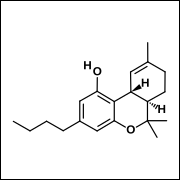
THCB has the molecular formula C₂₀H₂₈O₂ and is a structural homolog of Δ9 THC. While Δ9 THC contains a 5-carbon side chain, THCB contains a 4-carbon side chain. This slight structural variation changes how the molecule interacts with CB1 receptors within the endocannabinoid system, producing psychoactive effects that are broadly similar to Δ9 THC.

THCB molecular structure
THCH

THCH is a cannabinoid structurally related to Δ9 THC and belongs to the same family of psychoactive THC analogs. Users often describe its effects as similar to traditional THC, including euphoria, relaxation and altered sensory perception. Because of its stronger interaction with cannabinoid receptors, THCH is generally considered more potent than Δ9 THC, often estimated to produce roughly 2 to 3 times the psychoactive strength of Δ9 THC.

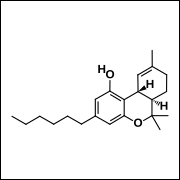
THCH has the molecular formula C₂₂H₃₂O₂ and is a structural homolog of Δ9 THC. While Δ9 THC contains a 5-carbon side chain, THCH contains a 6-carbon side chain. This longer carbon chain increases its ability to activate CB1 receptors within the endocannabinoid system, which helps explain its stronger psychoactive activity compared to Δ9 THC.

THCH molecular structure
THCP

THCP is a natural cannabinoid that was discovered in cannabis in 2019 and belongs to the same family of psychoactive cannabinoids as Δ9 THC. Its effects are generally described as similar to Δ9 THC, including euphoria, relaxation and altered sensory perception. However, because of its stronger interaction with cannabinoid receptors, THCP is considered significantly more potent than Δ9 THC. Based on receptor binding studies, THCP is often described as producing psychoactive effects that may be around 5 to 10 times stronger than Δ9 THC.

THCP has the molecular formula C₂₃H₃₄O₂ and occurs naturally in cannabis plants in extremely small concentrations. While Δ9 THC contains a 5-carbon side chain, THCP contains a 7-carbon side chain. This longer carbon chain significantly increases its binding affinity for CB1 receptors in the endocannabinoid system, which explains its much stronger pharmacological activity compared to Δ9 THC.

THCP molecular structure
THCJD

THCJD is a cannabinoid structurally related to Δ9 THC and belongs to the same family of psychoactive THC analogs. Users often describe its effects as broadly similar to traditional THC, including euphoria, relaxation and altered sensory perception. Because of its extended molecular structure, THCJD is generally considered more potent than Δ9 THC, and is often estimated to produce psychoactive effects several times stronger than Δ9 THC.

THCJD has the molecular formula C₂₄H₃₆O₂ and is a structural homolog of Δ9 THC. While Δ9 THC contains a 5-carbon side chain, THCJD contains an 8-carbon side chain. This longer carbon chain can increase its interaction with CB1 receptors in the endocannabinoid system, which is believed to contribute to its stronger cannabinoid receptor activity compared to Δ9 THC.

THCJD molecular structure
HHCP

HHCP is a cannabinoid structurally related to THCP and belongs to the same family of psychoactive THC analogs. Users often describe its effects as similar to traditional THC but significantly stronger and longer lasting. Because of its strong interaction with cannabinoid receptors, HHCP is considered a highly potent psychoactive cannabinoid, often estimated to produce effects ~10 times stronger than Δ9 THC.

HHCP has the molecular formula C₂₃H₃₆O₂ and is a hydrogenated analog of THCP. While THCP contains a 7-carbon side chain, HHCP retains this extended side chain but with a saturated molecular structure due to hydrogenation. This structure allows HHCP to interact strongly with CB1 receptors within the endocannabinoid system, contributing to its powerful psychoactive activity compared to Δ9 THC.

HHCP molecular structure
H4CBD

H4CBD is a cannabinoid derived from CBD through hydrogenation. Unlike traditional CBD, H4CBD can produce mild psychoactive effects, although these are significantly weaker than those of Δ9 THC. Users often describe its effects as relaxing and calming, with a gentle uplift in mood. It is commonly estimated to produce psychoactive effects at roughly 30% of the strength of Δ9 THC.

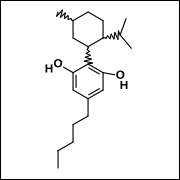
H4CBD has the molecular formula C₂₁H₃₄O₂ and is created by hydrogenating CBD, which adds hydrogen atoms to the molecule and changes its three-dimensional structure. This structural change increases its interaction with CB1 receptors compared to regular CBD, which normally has very low CB1 affinity. Because of this, H4CBD may produce mild psychoactive effects while potentially retaining some of the therapeutic properties commonly associated with CBD.

H4CBD molecular structure
Terpenes

Terpenes are aromatic compounds found throughout the plant kingdom and are responsible for the distinctive smell and flavor of cannabis. In cannabis plants they are produced in the same resin glands that create cannabinoids, which is why terpene profiles are closely associated with specific strains. In addition to influencing aroma and taste, terpenes are believed to play a role in the overall effect profile of cannabis through interactions with cannabinoids, a phenomenon commonly referred to as the entourage effect.

Botanically Derived Terpenes

Botanically derived terpenes are naturally extracted from non-cannabis plants such as citrus fruits, pine trees and herbs. Many of the same terpene molecules found in cannabis also occur in other plants, which allows them to be sourced from natural botanical materials. This also makes it possible to create new and more exotic flavor profiles that do not naturally occur in cannabis, such as brighter fruit-forward or tropical strain profiles, while maintaining consistent quality and purity.

Cannabis Derived Terpenes

Cannabis derived terpenes are extracted directly from cannabis plants. Because they originate from the same plant species, they preserve the natural terpene composition that occurs in cannabis flower. This can provide a more authentic aroma profile that closely resembles the scent of the original plant.

Live Resin Hemp Derived Terpenes

Live resin hemp derived terpenes are extracted from freshly harvested hemp plants that are frozen immediately after harvest. This process preserves delicate volatile compounds that are often lost during drying and curing. As a result, live resin terpene extracts typically deliver a stronger, richer and more complex flavor profile that more closely reflects the aroma of the living plant.

SKU N/A Categories , Brand:

Description

This tincture delivers high-purity Δ9 at 15% strength in a smooth MCT carrier. Designed for sublingual use, it offers a slower, more layered effect than vaping — ideal for steady daytime use or longer nighttime sessions.

dosage

To use: apply drops under the tongue and hold for 60 seconds before swallowing. Expect effects after 30–60 minutes.

Dose LevelDropsApprox. Δ9 Content
Low3 drops30 mg
Medium12 drops120 mg
High24 drops240 mg

Please note that using Δ9 in edible format causes a different effect then when vaped. Overall, the experience is stronger and longer. Dosage can vary alot per person.

Effects

The onset is slower compared to inhaled THC — expect a gradual lift beginning around 30 to 60 minutes after use, with peak effects between 1 and 2 hours. Because part of the THC is converted by your liver into 11-hydroxy-THC, the experience is noticeably deeper, more layered, and longer-lasting.

Mentally, it starts with a light buzz that sharpens your mood and focus, followed by a calm body float that settles in without any rush. Low doses feel clean and functional, perfect for daytime use or light enhancement. Higher doses deliver a fuller high — euphoric, expansive, and anchored in the body — with effects that can last 6 to 8 hours depending on your metabolism and tolerance.

It’s not an instant hit, but the steadiness and longevity make it ideal for anyone seeking a reliable, longer-form THC experience without re-dosing every hour.

Relaxing

30%

Energizing

Relaxing

Energizing

30%

flavour

Completely neutral with no aroma or bitterness.

Δ9

20%

C8 MCT oil

80%

Δ9 per 1ml

200mg

Δ9 per 1 drop

10mg

11 reviews for Δ9 tincture | TERPLABZ

  1. 4.45
    (11 customer reviews)
    82% of customers recommend this product.
    5 Stars82%4 Stars0%3 Stars9%2 Stars0%1 Star9%
  2. izdirvaniq (verified owner)

    Great quality and effects 👏

  3. John (verified owner)

    Sublingual use does not seem to work, however oral works great, 4-5 drops produce powerful effects within an hour

  4. jamalll

    Good quality bottle and really nice high

  5. judeprice11 (verified owner)

    As with everything sold on this site, it’s really really bloody potent, even more so than the legitimate uk medical tincture oils I’ve bought from people before that are much more expensive on prescription. It is twice as strong as a the previous oil I was using per drop. I tried what was probably half a dropper and that got me very very elevated shall we say. Nothing bad to say except low tolerance users seriously need to exercise caution or probably use the hhc tincture instead and buildup to this. In future if you sold one that was 50% cbd and 50% d9 it would be the perfect tincture for me.

  6. Hazee

    Holy Hit be careful guys its rlly potent

  7. moggarrr

    1 dropper and ur gone for a solid 6 hours

  8. Tijn de Jong (verified owner)

    Works really well, great high, just make sure to use after eating / having ate a meal earlier, if you have no bottom in your stomach for the micelles to break down the thc, you will miss alot of the effect. ( because its liquid, itll pass through too fast to be processed thoroughly. )

  9. eyomelz (verified owner)

    Really nice Δ9 tincture. Effects come on smooth and steady, and it’s easy to control the dose depending on what you’re going for.

    Works well as a base before a session, and if you take a larger dose it can definitely pack a stronger punch. Simple, reliable and versatile. Very nice

  10. moggarrr (verified owner)

    guys i swear take 1 and wait like 3 hours to feel powerfull effects cuz for some reason i felt nothing after 2 hours and i also kept taking more until i was like 150mg deep and let me tell u i didnt make it home without blacking out and somehow i lost my wallet but i had my money and credit cards in my jacket. ( so be carefull cuz my bros took like same amount and they slept like 2 days )

  11. Daryphe (verified owner)

    I wish i’d knew about this earlier.

    I like it better than gummies,and yes,it’s more potent,even for high tolerance users.(More drops😎)

    Like the man said,it works better on a full stomach.

    It’s got a nice,mild flavor,too.

    Don’t be afraid by the price,because in the end,it’s more advantageous than x gummies.

    I’ll definitely reorder, thanks Terplabz👃🏼

  12. Zondar

    For me not working, what a waste..

    • terpgod

      Sorry to hear! I can’t promise anything, but if you message us maybe we can check if there are any problems. Normally they are really potent!

Add a review

Your email address will not be published. Required fields are marked *

Recommended for you